 Project 01
Live Project: Dogecoin Price Prediction with ML
This is the first project among Top 10 Data Science project for Resume aims to predict the short-term closing price of Dogecoin (DOGE) using historical market data & advanced time series forecasting techniques. By leveraging the SARIMAX model, it incorporates external market indicators & engineered features such as volume-based metrics & price ratios to improve prediction accuracy.
The SARIMAX model is built with closing price as the dependent variable & other selected features as exogenous inputs. It is trained on the initial portion of the data & tested on the last 19 days, with predictions plotted against actual values for performance visualization.
Source Code → Project 02
Identifying Handwritten Digits Using Logistic Regression in PyTorch
This is the second project among Top 10 Data Science project for Resume, showcases how logistic regression, a basic yet effective machine learning algorithm, can be implemented using PyTorch to classify handwritten digits from the MNIST dataset. The MNIST dataset consists of 28×28 pixel grayscale images representing digits from 0 to 9.
The model was trained over five epochs using batches of image data, with each training step involving zeroing gradients, performing a forward pass, computing loss, backpropagating, & optimizing weights. Upon evaluation, the model achieved an accuracy of approximately 82% on the test dataset.
Source Code →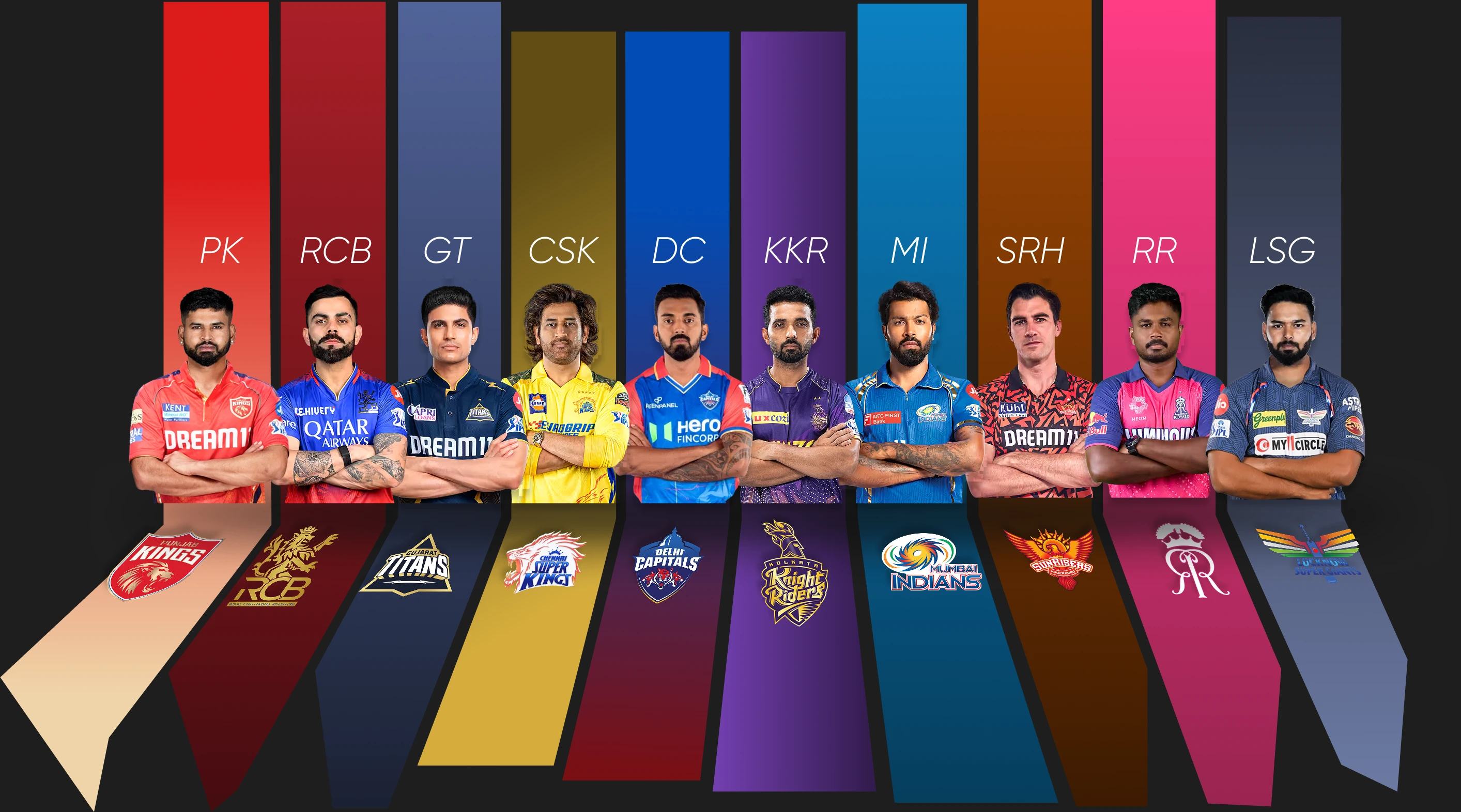 Project 03
IPL Data Analysis Using Pandas AI
This is the third project among Top 10 Data Science project for Resume, explores the power of Pandas AI, a generative AI tool that enables natural language querying on DataFrames using LLMs. The focus was to analyze the IPL 2023 Auction dataset & derive insights such as top buys, team-wise spending, unsold players, & player categories, all using simple English prompts.
By using the .chat() method of Pandas AI, insights
were generated including the most expensive & cheapest
players, team-wise expenditure, bar plots of category-wise
spend, & predictions like Sam Curran's future team.
 Project 04
Heart Disease Prediction Using Data Science
This is the fourth project among Top 10 Data Science project for Resume, leverages the Framingham Heart Study dataset to predict the 10-year risk of coronary heart disease (CHD) in patients using logistic regression. The dataset contains medical, behavioral & demographic data from over 4,000 individuals.
EDA revealed significant class imbalance with far more non-CHD cases. The model performed reasonably well overall but struggled to detect positive CHD cases, highlighting the need for class rebalancing or more advanced algorithms like Random Forest or XGBoost.
Source Code → Project 05
Titanic Survival Prediction Using Data Science
This is the fifth project among Top 10 Data Science project for Resume, uses machine learning to predict passenger survival from the Titanic disaster using the Kaggle dataset. We worked with demographic, socio-economic & categorical data like age, gender, class, fare & family size.
We trained a Random Forest Classifier due to its robustness & accuracy. Data was split into training (80%) & validation (20%) sets, achieving ~83.8% accuracy on unseen test data.
Source Code → Project 06
Scraping Amazon Product Information
This is the sixth project among Top 10 Data Science project for Resume, focuses on scraping product data from Amazon using Python with libraries like BeautifulSoup, requests & lxml. The scraper extracts vital product details such as title, price, rating, reviews & availability from multiple URLs stored in a text file.
Each product's data is systematically written to a CSV file, with exception handling implemented for missing or dynamic elements, simulating real-world use cases like competitor analysis & price monitoring.
Source Code → Project 07
SMS Spam Detection Using TensorFlow
Builds an end-to-end SMS spam classification system using traditional ML algorithms & deep learning models in TensorFlow. The pipeline moves from a baseline Naive Bayes model using TF-IDF to more advanced architectures like custom Embedding layers, BiLSTM networks, & Transfer Learning with the Universal Sentence Encoder (USE).
The final result shows that transfer learning with USE outperforms all other models in detecting spam messages accurately, achieving the highest F1-score by capturing semantic meaning in sentences.
Source Code → Project 08
Uber Rides Data Analysis Using Python
Focuses on analyzing Uber ride data using Python to uncover patterns in user behavior, ride purposes & travel times. Feature engineering was done by segmenting time into Morning, Afternoon, Evening & Night, revealing seasonal dips in winter (Nov–Jan) & strong usage for short distances under 20 miles.
Correlation analysis using a heatmap revealed a strong negative relationship between Business & Personal rides. Most users took short trips around 4–5 miles, with long-distance rides being rare.
Source Code → Project 09
Flipkart Reviews Sentiment Analysis
Performs sentiment analysis on Flipkart product reviews using natural language processing & machine learning. Reviews with ratings 4 & 5 are considered positive, while those rated 3 or below are negative. Using TF-IDF for vectorization, a Decision Tree Classifier is trained to detect sentiment.
The model achieves an accuracy of around 86%, effectively classifying user sentiments & enabling businesses to monitor brand perception at scale through automated sentiment tracking.
Source Code →